St. John's Wort
Keywords: hypericum herb, klamath weed, goat weed, depression, anxiety
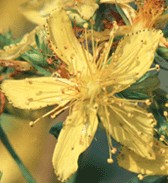 © Steven Foster © Steven Foster
Introduction
This fact sheet provides basic information about the herb. A plant or part of a plant used for its flavor, scent,
or potential therapeutic properties. Includes flowers, leaves, bark, fruit, seeds, stems, and roots. St.
John's wort—common names, uses, potential side effects, and resources for more information. St.
John's wort is a plant with yellow flowers whose medicinal uses were first recorded in ancient
Greece. The name St. John's wort apparently refers to John the Baptist, as the plant blooms
around the time of the feast of St. John the Baptist in late June.
Common Names—St. John's wort, hypericum, Klamath weed, goat weed
Latin Name—Hypericum perforatum
What It Is Used For
- St. John's wort has been used for centuries to treat mental disorders and nerve pain
- St. John's wort has also been used as a sedative and a treatment for malaria, as well as a balm for wounds,
burns, and insect bites.
- Today, St. John's wort is used by some for depression, anxiety, and/or sleep disorders.
How It Is Used
The flowering tops of St. John's wort are used to prepare teas and tablets containing concentrated extracts.
What the Science Says
- There is some scientific evidence that St. John's wort is useful for treating mild to moderate
depression. However, two large studies, one sponsored by NCCAM, showed that the herb was no more
effective than placebo in treating major depression of moderate severity.
- NCCAM is studying the use of St. John's wort in a wider spectrum of mood disorders, including minor
depression.
Side Effects and Cautions
- St. John's wort may cause increased sensitivity to sunlight. Other side effects can
include anxiety, dry mouth, dizziness, gastrointestinal symptoms, fatigue, headache, or sexual
dysfunction.
- Research shows that St. John's wort interacts with some drugs. The herb affects the way the body processes
or breaks down many drugs; in some cases, it may speed or slow a drug's breakdown. Drugs that can be affected
include:
- Antidepressants
- Birth control pills
- Cyclosporine, which prevents the body from rejecting transplanted organs
- Digoxin, which strengthens heart muscle contractions
- Indinavir and possibly other drugs used to control HIV infection
- Irinotecan and possibly other drugs used to treat cancer
- Warfarin and related anticoagulants
- When combined with certain antidepressants, St. John's wort may increase side effects such as nausea,
anxiety, headache, and confusion.
- St. John's wort is not a proven therapy for depression. If depression is not adequately treated, it can
become severe. Anyone who may have depression should see a health care provider. There are effective proven
therapies available.
- Tell your health care providers about any complementary and alternative practices you use. Give them a full
picture of what you do to manage your health. This will help ensure coordinated and safe care.
Sources
|