Diabetes and CAM: A Focus on Dietary Supplements
Introduction
Diabetes is a chronic condition affecting millions of Americans. Conventional medical
treatments are available to control diabetes and its complications. However, some people also
try complementary and alternative medicine (CAM) therapies, including dietary supplements. This fact sheet
provides basic information on diabetes (with a focus on type 2), summarizes
scientific research on the effectiveness and safety of selected supplements that people with
diabetes sometimes use, and suggests sources for additional information.
Key Points
- In general, there is not enough scientific evidence to prove that dietary supplements have
substantial benefits for type 2 diabetes or its complications.
- It is very important not to replace conventional medical therapy for diabetes with an unproven CAM
therapy.
- Tell your health care providers about any complementary and alternative practices you use. Give them
a full picture of what you do to manage your health. This will help ensure coordinated and safe care. Medicines
for diabetes and other health conditions may need to be adjusted if a person is also using a dietary
supplement.
About Diabetes
Diabetes encompasses a group of diseases. Type 2 diabetes accounts for 90 to 95
percent of all diagnosed cases and occurs more frequently in older people.
Type 1 diabetes, which accounts for 5 to 10 percent of cases, usually strikes
children and young adults. A third form, gestational diabetes, develops in some
women during pregnancy.
In all forms of diabetes, the body's ability to convert food into energy is impaired. After a meal, the body breaks
down most food into glucose (a kind of sugar), the main source of fuel for cells. In people with diabetes, the body
does not make enough insulin—a hormone that helps glucose enter cells—or the cells do not respond to insulin
properly. Often, both insulin production and insulin action are impaired. Without treatment, glucose builds up in
the blood instead of moving into the cells, where it can be converted into energy. Over time, the high blood
glucose levels caused by diabetes can damage many parts of the body, including the heart and blood vessels, eyes,
kidneys, nerves, feet, and skin. Such complications can be prevented or delayed by controlling blood glucose, blood
pressure, and cholesterol levels.
Type 2 diabetes, the focus of this fact sheet, most often is associated with older
age (although it is increasingly being diagnosed in children), obesity (about
80 percent of people with type 2 diabetes are overweight), a family history of diabetes, and
physical inactivity. Certain minority population groups are at greater risk, as are women who have
had gestational diabetes. Type 2 diabetes usually begins as insulin resistance, a
disorder in which cells do not use insulin properly. Symptoms develop gradually and may include fatigue,
frequent urination, excessive thirst and hunger, weight loss, blurred vision, and slow-healing wounds or sores.
However, it is possible to have type 2 diabetes without experiencing any symptoms.
People with diabetes should try to keep their blood glucose in a healthy range. The basic tools for managing type 2
diabetes are healthy eating, physical activity, and blood glucose monitoring. Many people also need to take
prescription pills, insulin, or both.
To find out more about diabetes and related conditions, contact the National Diabetes Information Clearinghouse
(see For More Information).
 © iStock 2006 © iStock 2006
Dietary Supplements and Type 2 Diabetes
Some people with diabetes use CAM therapies for their health condition. For example, they may try
acupuncture or biofeedback to help with
painful symptoms. Some use dietary supplements in efforts to improve their
blood glucose control, manage symptoms, and lessen the risk of developing serious complications such as heart
problems.
This section addresses what is known about a few of the many supplements used for diabetes, with a focus on some
that have been studied in clinical trials, such as alpha-lipoic acid, chromium,
omega-3 fatty acids, and
polyphenols.
Alpha-lipoic acid (ALA, also known as lipoic acid or thioctic acid) is an antioxidant—a
substance that protects against cell damage. ALA is found in certain foods, such as liver, spinach,
broccoli, and potatoes. Some people with type 2 diabetes take ALA supplements in the hope of lowering
blood glucose levels by improving the body's ability to use insulin; others use ALA to prevent or treat diabetic
neuropathy (a nerve disorder). Supplements are marketed as tablets or capsules.
- ALA has been researched for its effect on insulin sensitivity, glucose metabolism, and diabetic neuropathy.
Some studies have found benefits, but more research is needed. (There are some studies, reported from outside
the United States, of ALA delivered intravenously; however, this research is outside the scope of this fact
sheet.)
- Because ALA might lower blood sugar too much, people with diabetes who take it must monitor their blood
sugar levels very carefully.
Chromium is an essential trace mineral—that is, the body requires small amounts of it to
function properly. Some people with diabetes take chromium in an effort to improve their blood glucose control.
Chromium is found in many foods, but usually only in small amounts; relatively good sources include meat, whole
grain products, and some fruits, vegetables, and spices. In supplement form (capsules and tablets), it is sold as
chromium picolinate, chromium chloride, and chromium nicotinate.
- Chromium supplementation has been researched for its effect on glucose control in people with diabetes.
Study results have been mixed. Some researchers have found benefits, but many of the studies have not been well
designed. Additional, high-quality research is needed.
- At low doses, short-term use of chromium appears to be safe for most adults. However, people with diabetes
should be aware that chromium might cause blood sugar levels to go too low. High doses can cause serious side
effects, including kidney problems—an issue of special concern to people with diabetes.
 © iStock 2006 © iStock 2006
Omega-3 fatty acids are polyunsaturated fatty acids that come from foods such as
fish, fish oil, vegetable oil (primarily canola and soybean), walnuts, and wheat germ.
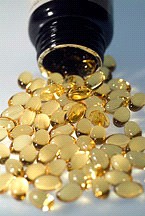
Omega-3 supplements are available as capsules
or oils (such as fish oil). Omega-3s are important in a number of bodily functions, including the movement of
calcium and other substances in and out of cells, the relaxation and contraction of muscles, blood clotting,
digestion, fertility, cell division, and growth. In addition, omega-3s are thought to protect against heart
disease, reduce inflammation, and lower triglyceride levels.
- Omega-3 fatty acids have been researched for their effect on controlling glucose and reducing heart disease
risk in people with type 2 diabetes. Studies show that omega-3 fatty acids lower triglycerides, but do not
affect blood glucose control, total cholesterol, or HDL (good) cholesterol in people with diabetes. In some
studies, omega-3 fatty acids also raised LDL (bad) cholesterol. Additional research, particularly long-term
studies that look specifically at heart disease in people with diabetes, is needed.
- Omega-3s appear to be safe for most adults at low-to-moderate doses. Safety questions have been raised
about fish oil supplements, because some species of fish can be contaminated by substances such as mercury,
pesticides, or PCBs. In high doses, fish oil can interact with certain medications, including blood thinners
and drugs used for high blood pressure.
Polyphenols—antioxidants found in tea and dark chocolate, among other dietary
sources—are being studied for possible effects on vascular health (including blood pressure) and on the body's
ability to use insulin.
- Laboratory studies suggest that EGCG, a polyphenol found in green tea, may protect against cardiovascular disease and have a
beneficial effect on insulin activity and glucose control. However, a few small clinical trials studying
EGCG and green tea in people with diabetes have not shown such effects.
- No adverse effects of EGCG or green tea were discussed in these studies. Green tea is safe for most adults
when used in moderate amounts. However, green tea contains caffeine, which can cause, in some people, insomnia,
anxiety, or irritability, among other effects. Green tea also has small amounts of vitamin K, which can make
anticoagulant drugs, such as warfarin, less effective.
Other supplements are also being studied for diabetes-related effects. For example:
- Preliminary research has explored the use of garlic for lowering blood glucose
levels, but findings have not been consistent.
- Studies of the effects of magnesium supplementation on blood glucose control have had
mixed results, although researchers have found that eating a diet high in magnesium may lower the risk of
diabetes.
- There is not enough evidence to evaluate the effectiveness of coenzyme
Q10 supplementation as a CAM therapy for diabetes; studies of its ability to affect glucose
control have had conflicting findings.
- Researchers are studying whether the herb ginseng and the trace mineral vanadium might help control
glucose levels.
- Some people with diabetes may also try botanicals such as prickly pear cactus, gurmar, Coccinia
indica, aloe vera, fenugreek, and bitter melon to control their glucose
levels. However, there is limited research on the effectiveness of these botanicals for diabetes.
If You Have Diabetes and Are Thinking About Using a Dietary
Supplement
- Tell your health care providers about any complementary and alternative practices you use. Give them a full
picture of what you do to manage your health. This will help ensure coordinated and safe care. For tips about
talking with your health care providers about CAM, see NCCAM's Time to Talk campaign at
nccam.nih.gov/timetotalk/. Medicines for diabetes and other health conditions may need to be adjusted if a
person is also using a dietary supplement.
- Women who are pregnant or nursing, or people who are thinking of using supplements to treat a child, should
consult their health care provider before using any dietary supplement.
- Do not replace scientifically proven treatments for diabetes with CAM treatments that are unproven. The
consequences of not following one's prescribed medical regimen for diabetes can be very serious.
- Be aware that the label on a dietary supplement bottle may not accurately reflect what is inside. For
example, some tests of dietary supplements have found that the contents did not match the dose on the label,
and some herbal supplements have been found to be contaminated.
NCCAM-Funded Research
NCCAM-supported research includes projects studying the effects of:
- Chromium on glucose control and vascular function
- Yoga in people at risk for diabetes
- Ginkgo biloba extract on diabetes medicines
- EGCG on the body's response to insulin
- Reiki on diabetic neuropathy and heart function.
Also, researchers in the Diabetes Unit of NCCAM's Division of
Intramural Research (DIR) are studying many aspects of diabetes, including what happens when the body
does not properly react to insulin. DIR-sponsored clinical trials include studies of the effects of vitamin C,
glucosamine, and dark chocolate on the body's response to insulin.
Selected Sources
About Diabetes
Dietary Supplements: Natural Medicines Comprehensive Database
- Natural Medicines Comprehensive Database. Product monographs. Accessed on January 21, 2008.
Dietary Supplements: Articles From Scientific Journals
Dietary Supplements: Articles From Scientific
Journals
Chromium
Coenzyme Q10
- Bonadkdar RA, Guarneri,
E.
Coenzyme Q10. American Family
Physician. 2005;72(6): 1065–1069.
Garlic
- Agency for Healthcare Research and
Quality. Garlic: Effects on Cardiovascular Risks and
Disease, Protective Effects Against Cancer, and Clinical Adverse Effects. Evidence Report/Technology Assessment no. 20. Rockville, MD: Agency for Healthcare Research and Quality;
2000. AHRQ publication no. 01-E023.
- Banerjee SK, Maulik SK.
Effect of garlic on cardiovascular disorders: a
review. Nutrition Journal.
2002;1(1):4.
Magnesium
Omega-3 Fatty Acids
- Agency for Healthcare Research and
Quality. Effects of Omega-3 Fatty Acids on Lipids and
Glycemic Control in Type II Diabetes and the Metabolic Syndrome and on Inflammatory Bowel Disease,
Rheumatoid Arthritis, Renal Disease, Systemic Lupus Erythematosus, and
Osteoporosis. Evidence Report/Technology Assessment no.
89. Rockville, MD:
Agency for Healthcare Research and Quality; 2004. AHRQ publication no. 04-E012-2.
- Hartweg J, Farmer AJ, Perera R, et
al.
Meta-analysis of the effects of n-3 polyunsaturated fatty acids on
lipoproteins and other emerging lipid cardiovascular risk markers in patients with type 2
diabetes. Diabetologia .
2007;50(8):1593-1602.
- Hartweg J, Perera R, Montori V, et al.
Omega-3 polyunsaturated fatty acids (PUFA) for type 2 diabetes mellitus:
review. The Cochrane Database of Systematic
Reviews. 2008; (1):CD003205. Accessed
on January 28, 2008.
- Letter regarding dietary supplement health
claim for omega-3 fatty acids and coronary heart disease. U.S. Food and Drug Administration Web site.
Accessed at
www.fda.gov on January 21, 2008.
- U.S. Food and Drug Administration. What
You Need to Know About Mercury in Fish and Shellfish. U.S. Food
and Drug Administration Web site. Accessed at
www.fda.gov/Food/FoodSafety/Product-SpecificInformation/Seafood/FoodbornePathogensContaminants/Methylmercury/ucm115662.htm
on January 21,
2008.
Polyphenols
- Collins QF, Liu HY, Pi J, et
al.
Epigallocatechin-3-gallate (EGCG), a green tea polyphenol,
suppresses hepatic gluconeogenesis through 5'-AMP activated protein kinase. Journal of Biological
Chemistry. 2007;282(41):30143–30149.
- Fukino Y, Shimbo M, Aoki N, et
al.
Randomized controlled trial for an effect of green tea consumption
on insulin resistance and inflammation markers. Journal of Nutritional Science and
Vitaminology. 2005;51(5):335–342.
- Kim J, Formoso G, Li Y, et
al.
Epigallocatechin gallate, a green tea polyphenol, mediates
NO-dependent vasodilation using signaling pathways in vascular endothelium requiring reactive oxygen species
and Fyn. Journal of Biological Chemistry 2007;282(18):13736–13745.
- Mackenzie T, Leary L, Brooks
WB.
The effect of an extract of green and black tea on glucose control
in adults with type 2 diabetes mellitus: double-blind randomized study. Metabolism .
2007;56(10):1340–1344.
- Potenza MA, Marasciulo FL, Tarquinio M, et al.
EGCG, a green tea polyphenol, improves endothelial function and
insulin sensitivity, reduces blood pressure, and protects against myocardial I/R injury in
SHR. American Journal of Physiology, Endocrinology, and Metabolism. 2007;292(5):E1378–E1387.
- Ryu OH, Lee J, Lee KW, et
al.
Effects of green tea consumption on inflammation, insulin
resistance and pulse wave velocity in type 2 diabetes patients. Diabetes Research and
Clinical Practice.
2006;71(3):356–358.
|